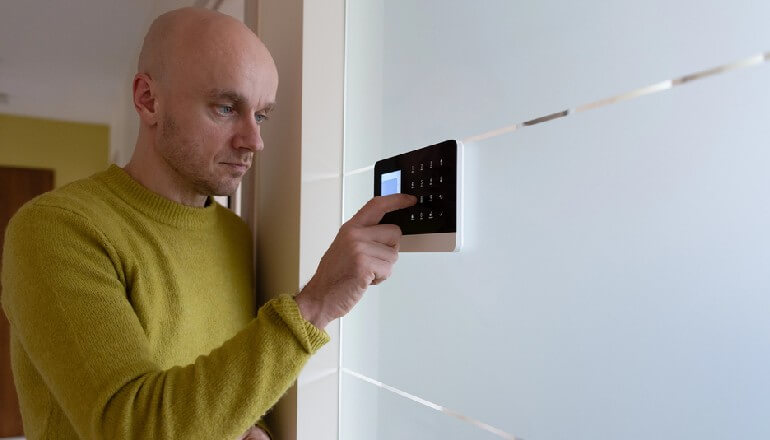
Harrogate Commercial Response Alarms – For many businesses in Harrogate, the challenge is no longer just detecting an intrusion — it’s ensuring that when an alarm activates, it leads to a meaningful and timely response. With increasing pressure on emergency services and stricter response criteria, commercial burglar alarm systems must now be designed around alarm verification, not just activation.
Traditional alarm systems rely on a simple trigger-and-alert model. A sensor activates, a signal is sent and a response is requested. However, without verification, many of these activations are treated as unconfirmed, which can delay or even prevent a priority response. This is where modern systems take a more advanced approach.
Verified alarm systems use multiple confirmation methods to establish that an intrusion is genuine. This can include sequential activation (two detectors triggered in a defined sequence), audio verification or integration with CCTV to provide visual confirmation. In Harrogate commercial premises, this significantly improves the reliability of alarm activations.
Sequential confirmation is one of the most common methods. Instead of relying on a single sensor, the system requires two independent triggers within a defined timeframe. For example, a door contact followed by internal movement detection. This reduces the likelihood of false alarms while increasing confidence that an intrusion has occurred.
CCTV integration enhances this further. When an alarm is triggered, associated cameras can provide real-time or recorded footage, allowing for immediate verification. This is particularly valuable in Harrogate businesses with high-value stock or sensitive environments, where rapid and informed response is critical.
Signalling plays a key role in verified systems. Dual-path signalling ensures that alarm signals are transmitted reliably, even if one communication path fails. In commercial settings, this level of resilience is essential to maintain continuous protection.
System design must support verification without compromising coverage. Perimeter protection remains the first layer, with door and window contacts detecting entry attempts. Internal detection then confirms movement within the premises, creating a structured sequence of events that supports verification.
Zoning is critical in this process. By dividing the premises into clearly defined areas, the system can identify exactly where activations occur and how they relate to each other. This allows for more accurate interpretation of events and improves response efficiency.
Out-of-hours protection is where verified systems deliver the most value. In many Harrogate commercial premises, buildings are unoccupied overnight, increasing vulnerability. A verified alarm ensures that any activation during this period is treated with greater urgency and confidence.
False alarms are a major concern in commercial environments. Unnecessary activations can disrupt operations, incur costs and reduce trust in the system. Verification methods help minimise this risk by ensuring that alerts are based on confirmed activity rather than isolated triggers.
User management is also important. Staff access to the system must be controlled and monitored, ensuring that arming and disarming procedures are followed correctly. Individual user credentials improve accountability and reduce the risk of misuse.
Maintenance ensures that all components continue to function correctly. Sensors, signalling devices and integrated systems must be tested regularly to ensure that verification processes operate as intended.
Training is essential to ensure that staff understand how the system works and how to respond to alerts. In verified systems, understanding the sequence of events is particularly important.
Security risk assessments underpin the entire design. Businesses must consider not only how an intrusion might occur, but how it will be detected and confirmed. This ensures that the system is aligned with both risk and response requirements.
For businesses in Harrogate, burglar alarm systems designed around verification provide a more effective and reliable approach to security. By ensuring that activations are meaningful and actionable, they deliver stronger protection, faster response and greater confidence in the system.