Burglar Alarm Grading –
When businesses in Harrogate look at commercial burglar alarm systems, one of the most overlooked factors is the alarm grading itself. Many companies focus heavily on:
- cameras
- monitoring
- mobile apps
- and visible deterrents
while paying little attention to whether the actual alarm system is correctly graded for the risks facing the premises.
However, alarm grading plays a major role in determining:
- the level of protection provided
- system design standards
- resistance to attack
- and suitability for commercial risks
For many businesses, grading can also affect insurance expectations and police response eligibility.
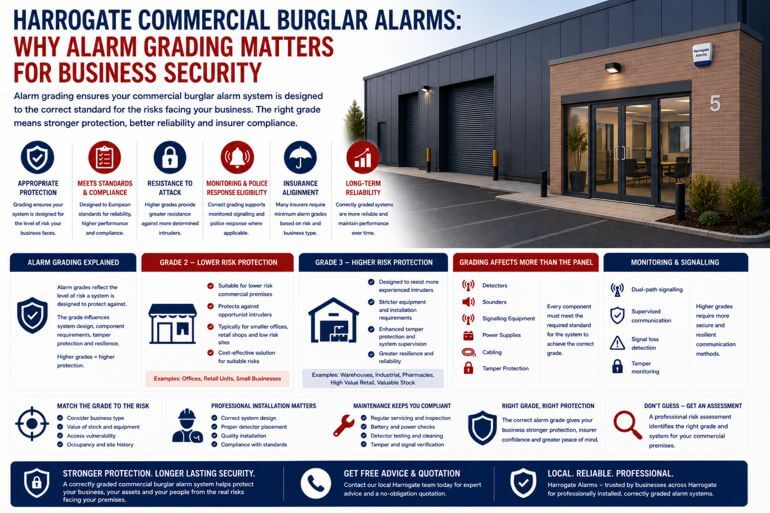
What Is Alarm Grading?
Commercial burglar alarm systems are commonly designed to European grading standards.
The grade reflects the level of risk the system is intended to protect against.
Generally:
- lower grades suit lower-risk premises
- higher grades are designed for more determined or experienced intruders
The grading influences:
- detector technology
- tamper protection
- signalling resilience
- power backup
- and overall system design
Grade 2 Systems Are Common for Lower Commercial Risks
Grade 2 systems are frequently installed within:
- smaller offices
- retail units
- and lower-risk commercial properties
These systems are generally designed to protect against opportunist intruders with limited knowledge of alarm systems.
For many smaller Harrogate businesses, Grade 2 may provide suitable protection depending on:
- stock value
- occupancy
- and insurer expectations
Grade 3 Systems Provide Higher Commercial Protection
Grade 3 systems are typically used for:
- warehouses
- industrial premises
- higher-risk retail
- pharmacies
- and businesses containing valuable stock or equipment
These systems are designed to resist more experienced intruders who may:
- carry tools
- understand alarm systems
- or deliberately target commercial premises
Grade 3 systems often include:
- enhanced tamper protection
- more resilient signalling
- stricter equipment requirements
- and increased supervision
Alarm Grading Affects Monitoring and Police Response
Many monitored commercial systems require grading compliance to support:
- monitored signalling
- confirmed activation
- and police response eligibility
Insurers may also specify minimum grades depending on:
- location
- business type
- stock value
- or claims history
Incorrect grading can sometimes create problems with compliance or insurance expectations.
Different Buildings Require Different Grades
There is no universal alarm grade suitable for every commercial property.
The correct grading depends on factors such as:
- business activity
- stock levels
- cash handling
- access vulnerability
- occupancy patterns
- and previous crime history
For example:
- a small office may suit Grade 2
- a warehouse storing valuable goods may require Grade 3
Alarm Grading Is About More Than the Control Panel
Some businesses assume grading relates only to the alarm panel itself.
In reality, the grading applies across the entire system including:
- detectors
- sounders
- signalling equipment
- power supplies
- cabling
- and tamper protection
All components must comply with the appropriate standard.
Higher Grades Usually Require More Secure Signalling
Commercial systems with monitoring often use:
- dual-path signalling
- supervised communication
- and enhanced tamper monitoring
Higher-grade systems typically require greater communication resilience to reduce the risk of signal loss or interference.
Installation Quality Remains Essential
Even a high-grade alarm system can perform poorly if:
- detectors are positioned incorrectly
- maintenance is neglected
- or installation quality is poor
Professional system design remains critical regardless of grading level.
Maintenance Helps Preserve Compliance
Commercial alarm systems should receive:
- regular servicing
- signalling checks
- battery testing
- detector inspection
- and tamper verification
Poor maintenance may compromise both:
- reliability
- and grading compliance
Businesses Should Understand Their Actual Risk Level
Many Harrogate businesses either:
- over-specify systems unnecessarily
- or underestimate their true risk profile
A professional site assessment helps identify:
- realistic threat levels
- appropriate grading
- and suitable system configuration
Commercial Alarm Systems Should Match the Risk
For businesses in Harrogate, alarm grading is not simply a technical label — it directly affects the quality and resilience of the protection provided.
Correctly graded commercial burglar alarm systems help provide:
- stronger intrusion protection
- improved monitoring reliability
- better insurer alignment
- and greater confidence in system performance
Modern business security should always reflect the real risks facing the premises rather than relying on generic alarm solutions.
Frequently Asked Questions
What does burglar alarm grading mean?
Alarm grading identifies the level of risk a burglar alarm system is designed to protect against.
What is the difference between Grade 2 and Grade 3 alarms?
Grade 3 systems provide higher levels of protection for greater commercial risks and more determined intruders.
Does alarm grading affect insurance?
Yes. Some insurers specify minimum alarm grades depending on business type and risk level.